Thursday, October 11, 2007

Model Selections from the Camus Papers Archive 2


William C5


I thought this was a successful intro / thesis. The way William worded it was what makes it effective.

In The Stranger, by Albert Camus, Camus suggests that mankind is illogical by nature through the illogical actions of the most ideally logical character, Monsieur Meursault. Meursault is habitually indifferent and acts only with regard to his physical being. He is the perfect model for the most logically sound person, as he utterly lacks emotion and thus is able to live life through pure logic. However, Meursault carries out the most illogical actions even though he is supposedly logical, a contradiction that leads to his death sentence and execution.


Emily Ro 6

This is an example from one of Emily's Body Paragraphs. I thought it was a wonderful piece of textual evidence to connect two seemingly different topics: religion and women. I also thought this could've been used to develop M's character in an analytical way--any ideas? Also, this connection between M's reaction to women and religion might be incredibly interesting to pursue a little more. Think about all the connections that could be made from the evidence and Emily's writing from this paragraph.

Meursault is opposed to religion. Religious ideas to him are not “worth one hair of a women’s head”(120). Meursault does not look highly on women throughout the book. When Raymond is beating the woman in his room Marie suggests Meursault to find a cop. Meursault’s response was that he “didn’t like cops”(36). Meursault’s indifference to the situation shows the lack of respect he has for women. When Meursault says that religious beliefs are not even equivalent to a hair of a women, religion to him means nothing, and he possibly resents it. Religion gives meaning to life, and Camus believes there is no meaning to life which is the belief that he shows through Meursault’s rant toward the Father.

Caitlyn H.5

A delightful intro/thesis that deals with the nature and philosophy of human existence. I actually thought this was pretty darn deep. Made me question the meaning of life and stuff like that.

In the novel The Stranger, Albert Camus uses the character of Mersault as an example of a being encompassed in the experience of being human; through Mersault’s apathy comes a glimpse of emotion at certain points in the story. One example of this crumbling facade is the metaphorical revelation he has at the moment of killing the Arab, the other, the breakdown of Mersault in the prison cell as he yells at the priest for his constant speaking of religion. Through these two outbursts comes the epitome of a human: an emotional being who hides from his problems, bottling them up for so long, that he is a stranger to himself.

and the conclusion to Caitlyn's essay:

These two passages suggest that there is a wide range of emotion somewhere inside of the indifferent and apathetic man that is Mersault. He is an example of what can happen to the person who bottles up their emotions into obscurity: they will explode at random times, and the results can be truly disastrous or can bring about great epiphanies about oneself.

Emily L.6

This first Body Paragraph does a great job of using the setting to set up Camus' struggle against society. Because of the successful integration of evidence, Emily allows herself to have some real commentary as to the effect of the placement of images in the scene to effect Camus' purpose. Emily's next two paragraphs also remind me of what a lot of you attempted in your essay--which was to either write about authority, absurdity, or both. For Camus, since we have no control over our own fate (which is absurd)--isn't it even more absurd that people with "authority" can also affect our fate? Not that there is anything we can do about this or that it is even wrong--it is just absurd and illogical. Life is full of irony, isn't it?

Then Meursault notices “a row of faces in front” (83) of him. Camus uses the court scene to symbolize society as a “whole” which Meursault describes that there was nothing to “distinguish one from another” (83). At this point, everyone is looking at him as if they are there to judge him. He “hadn’t realized that all those people were crowding in to see” (83) him, but now he’s at center stage between all the people and it is him versus society. Meursault is in constant conflict with society because his life exceeds beyond his control. The lawyers, juries, and witnesses now have the power to determine his fate. Meursault had been advised to “respond briefly to the questions” (85) and to “leave the rest to him (his lawyer)” (85). Unable to have any word on his own trial, his life is in the hands of others which is ultimately absurd because the witnesses are given the right to determine his life. As a result, the prosecutor makes false assumptions to the case, using non relevant information concerning his reaction on the day of his mother’s death to support what is undefined and what Meursault believes to be plain “bad luck”(92). The trial depicts nothing more than a “perfect reflection of… everything is true and nothing is true!” (91) The prosecutor never achieved a reason for why he shot the Arab, but improvised his own reason. Even without solid proof, the jury finds him guilty. His life was basically determined by people like Thomas Perez, who he met only for one day.

When the father speaks to Meursault concerning religion, it portrays a similar authoritarian over Meursault as the trial. The father insists “God can help you, every man in your position has turned to him,” (116). Society appears to constantly bring in meaning toward every aspect of life. They consider bringing in a priest so before one dies, they could realize the importance of their existence. Normally people want to seek god to rid their sins before dying. However, Christianity is just another belief in attempt to find meaning and order in life by basing it on God’s creation. Truthful to his beliefs and atheism, Meursault refuses to allow the father have religious authority over him because he believes that life is meaningless. Living was pointless for “we were all condemned to die” (117). It appears illogical to believe in God when God takes away life. If one is to believe in god, their only applying a fake proof into why certain rational events occur when most of the time; it’s just the way it is and there is no meaning.

Throughout the novel, Meursault believed that life by existentialism had no meaning or purpose. Without any concern or regards to finding a rational structure, his life was pretty much predetermined not only by fate but by those who afflicted his voice: the jury, lawyer, prosecutor, and the priest. Other people have more power and influence on his life that he did and that was what created the absurdity in the novel. It is not until the end when he’s in jail that Meursault grasps onto his life. Although humans have unchangeable destined fates, he realizes that he can control his emotions. Whether to morn and scream for help or to live the last day of his life like treasure was now his preference and his control. If Meursault had never realized his faults and gained an understanding of his absurd world, he wouldn’t have been able to experience a fulfilling happiness.


Quan T.6

Another take on the same theme:

In The Stranger, Albert Camus creates a paradox between living rationally and living irrationally. Camus’ discourteous tone establishes the character, Meursault, as a “stranger” in society. Meursault believes in living life rationally, however, he lives in a society, which contradicts his own beliefs. Through the absurdity of human society and the futility of truth, Camus suggests that life as a “stranger” is meaningless.

Indications of Meursault’s discourtesies are found during Maman’s funeral procession. Meursault views death as a natural phenomenon which occurs in life. He does not experience sadness or depression; therefore refuses to mourn for Maman’s death while her friends come to keep vigil around her coffin. Instead, he notices the every aspect of annoyance around him. Meursault is immediately irritated by the woman who started crying. At an environment where Meursault is supposed to reflect upon his loss, he only wishes to not “have to listen to her anymore” (10). He also notices that the elders “would look at the casket, or their canes or whatever else” (10). There is a natural tendency for humans to grieve over the loss of friends and family. Meursault’s focuses on observing the irritating actions of the Maman’s friends rather trying to sympathize with their thoughts and feelings. In his eyes, these people are wasting their time because it pointless to grieve over death. Camus chooses these words because they portray Meursault’s callous personality. Meursault’s rational thoughts separate him from the humane people present at the funeral.

Meursault’s insolence grows as the passage progresses. Meursault incorporates more bothersome factors from his experience into his thoughts. He is bothered by the “old people” (11) who are “making these weird smacking noises” (11). Meursault dares to suggest the “dead woman lying in front of them didn’t mean anything to them” (11) since they are “so lost in their thoughts” (11) making weird noises. Meursault contradicts himself because he clearly shows no respect for Maman. While the elders are paying respects to Maman, Meursault only shows concern for himself. He complains about his back hurting. Meursault further reveals that his “back was hurting more and more” (11); emphasizing Meursault’s self-centered personality. Camus carries Meursault’s incivility to another level. Not only does Meursault not sympathize with Maman’s friends, he displays the utmost disrespect by being inconsiderate and thinking solely of his own well being.

Wednesday, October 10, 2007

Camus Archive Model Paper 1

Laurie M6

I really like the thesis of this paper (a lot of you should have gone this route)--the philosophical aspect that we as humans understand things only though opposites (we understand light though comparisons with darkness etc.) is very effective for a thesis in this book. (Of course, later on in the year we will eventually read Wittgenstein who proved Hegel wrong--Hegel built a universe of philosophy based on opposites and then Wittgenstein argued that opposites were only theoretical and didn't actually exist (this, by the way, is a gross condensed and not very accurate version of postmodern philosophy--but I digress.))

Anyway, what was so effective about this thesis was that it was used for character analysis (and the growth of a character.) Laurie did a great job explicating even the rhythm of the language (pacing) and the effect it had on moments in the book. I highlighted a phrase that is too vague--many of you are addicted to this phrase, and I thought the use of personification was critical here to expand on. Many of you noticed Camus personifying the world, but no one really got at why? Any ideas as to how it affects the novel? anyway, very well done here.


The author Albert Camus emphasizes the idea that in order to achieve complete happiness one must suffer. In the novel The Stranger, Albert Camus wants the audience to comprehend that there is never a positive without a negative; they go hand and hand. Camus uses both long and short sentence structures in order to convey both struggle and happiness.

In this novel the main character, Meursault, undergoes many difficult times in his life. He grows up without a father; his mother dies and he is sentenced to death for murder. Meursault having an imperceptive attitude causes him to disregard all these happenings in his life. It takes a bit of time before Meursault realizes how much he has suffered throughout his life. Meursault comes to this realization when he is on his way back to prison after his trial. Camus’ word choice and structure of long sentences and Merusault’s list of memorabilia during his ride to prison aids the reader to understand how quickly he is going through all of this in his mind. He mentions in the van on the way to prison that he “recognized for a brief moment the smell and color of the summer evening” (97). Meursault is now recognizing all that he does not have “in the darkness of my mobile prison” (97). With the knowledge that he will be put to death Meursault is in deep agony, he knows he is truly suffering because he remembers the times when he “used to feel happy” (97). He goes through a list of different things he does not have anymore including, “birds in the square, the shouts of the sandwich sellers, the screech of the streetcars turning sharply through the upper town” (97). With the quickness of Meursault’s language it causes the reader to realize how nervous he is, giving him an anxious yet sad position. All these things he never paid attention to before are now being noticed, on his way to his main place of agony; his cellblock.

Meursault then transfers into his stage of realization. He understands that he will not have what he used to take advantage of before being convicted. It is now clear to Meursault that he is locked in this cell; Meursault goes “back to his cell that he went to wait for the next day” (97). He thinks about what he has to endure while in his jail cell, while recognizing the realness of his future suffering and soon death. Meursault wishes that prison would be “familiar paths traced in summer skies could lead as easily to prison as to the sleep of the innocent” (97). All the aspects of free life that Meursault does not have cause him to begin his true stage of agony. He now has to live with the fact that he is living in prison and it now becomes real to him. Meursault’s distraught tone in this passage conveys his sadness and acceptance of being in prison.

Camus also conveys the opposite of the previous passage in many different ways. Unlike the previous passage, Meursault grasps the importance and value of true happiness. After the death of his mother Meursault has no idea as to why people mourn for her. He realizes his mother concluded her life happily and “Maman must have felt free” (122). After all his suffering he feels “ready to live it all again too” (122). He wants to live it all again because he understands how to be happy and wants to feel the affects of happiness once more before his death. Meursault has a revelation about his mother’s life and is conveyed in a great way by his tone of excitement.

Meursault’s tone changes and is enthusiastic after his revelation. He decides to open himself “to the gentle indifference of the world”(122). With this he is now open to worldly emotions he now sees himself like a “brother, really” (123). Meursault assures the reader that he really feels like a brother. Camus wants to emphasize Meursault’s change by using clarifying language and his choice of punctuation aids in this as well. Meursault then goes on to say, “I had felt that I had been happy and that I was happy again” (123). Meursault’s indifference as to why his mother wanted to die happy has now changed into assurance. It takes Meursault a while to fully understand the impact of happiness after he undergoes an abundance of suffering.

Camus wants the reader to comprehend that in order to truly understand the value of happiness one must suffer. Meursault endures pain and sadness. After undergoing all these trying times, before he is executed Meursault is happy and gains the ability to feel the side effects of happiness and dies happily.

Model Selections from the Camus Papers Archive

Elina R6

I thought this essay did a fine job transitioning between two passages and connecting them--You are picking up this first paragraph mid-argument, but Elina establishes the relationship of Salamano and his dog to argue that Camus shows that relationships can force people into subservient and authoritarian roles that eschew individuality. Notice Elina's transition, (though she could've highlighted this with her own language a little more)--how Camus introduces Raymond immediately after this scene to establish a connection to Raymond's relationship with his mistress--a very appropriate comparison for her thesis. Camus' decision to introduce Raymond after this scene is so critical to highlighting his characterization. Though subtle, plot placement can be effective in argument, much more effective than plot summary.

In this particular relationship, Salamano has power over the ignorant dog. The role each character plays is evident when the spaniel attempts to surpass his owner making Salamano stumble behind him. Old Salamano in response to the humiliation and disobedience “beats the dog and swears at it. The dog cowers and trails behind. Then it’s the old man who pulls the dog” (27). Salamano’s authoritarian power takes over his character making him act violently. He uses his superior size and knowledge to his advantage to get back at the dog and keep him under his control. The failure of this relationship has unleashed an evil beast within Salamano. The unsuccessful correlation has changed him by turning him into an aggressive character. Salamano has assumed his position as the master, controlling every situation as he pleases, without any concern of how the consequences may affect his companion.

Along with Celeste, the owner of the diner, Meursault tries to identify the cause of Salamano’s violent behavior. Unfortunately, Salamano is too busy yelling at his dog to notice he is being spoken to and leaves the diner. Subsequential to the violent exit of Salamano and his dog, Meursault encounters his other neighbor, Raymond Sintes. He is known as the man who uses women to make money but when asked, he replies he’s a ‘warehouse guard’. As the conversation of the two men unravels, Meursault finds out that out that Raymond has a mistress and that he has beaten her until she bled. Raymond comes off as exactly what he calls himself, a ‘warehouse guard’. His behavior suggests that he uses women when he pleases and puts them away in a ‘warehouse’ once he’s through with them. Camus purposely has Meursault consequentially encounters his two neighbors who happen to both have unsuccessful relationships. In order to emphasize his view on relationships, Camus introduces Raymond and his mistress.


Benwit L6

I thought this was a solid introduction and an interesting thesis--the technical term Camus employs here is juxtaposition, another technique authors use to establish subtle theories on complex topics.

Introduction:

The importance of religion in humanity is a disputable issue that has been brought up countless times. Religion both enlightens and angers people; it is capable of both causing war and giving people the will to live. In the novel The Stranger by Albert Camus, Camus suggests that religion is not essential to living a complete and fulfilling life through the vastly contrasting interactions Meursault has between the abrasive Raymond and the faithful chaplain.

Except for the last seven words of the conclusion (cliche), I thought this was a nice example of "finishing" the logical argument of an essay without "saving the main point until the end" or "summarizing the main points of the essay"--both things you want to avoid in conclusions. Conclusions are probably the hardest thing to teach for this reason.

Conclusion:

Meursault as a symbol can be seen as the voice of reason and as a character, a human being untouched by morals and by unscientific thoughts. Therefore, Camus suggests that humans by nature do not require the concept of religion to be truly considered humane. In addition, the reader can infer that human nature will naturally have an affinity toward earthly desires as shown with Meursault’s friendship with Raymond. Logically speaking, living a carefree and perhaps moral-less life may be more natural than living with the commonly accepted morals that may be holding people back from living their lives to the fullest.


Meg S 6

I thought the main point of the thesis (though the intro could've been more subtle and integrated) was pretty cool. This gets at something incredibly universal without falling into cliche--the success, of course, comes in the following argument. I am posting the first couple of pages (the most effective). I think the image of the "bulging stomachs" could've been further analyzed for author's purpose in the first body paragraph--any theories on what Camus was doing? This is also a wonderful example of character analysis--most of you suffer from your theories about why characters act they way they do, but do not go back to the text to psychoanalyze them. The text here (imagery and actions) are critical to establishing character analysis.

In The Stranger , author Albert Camus' curt diction, offensive tone, and simple, direct syntax contribute to the characterization of the main character, Meursault. Meursault acts inhumanely in the face of situations that typically elicit emotion. Through his characters' indifference, Camus exposes the tendency of men to put on a masculine front in order to hide their true emotions.

The first instance of his insensitivity is at Maman's funeral. Her friends, the other elderly residents from her nursing home, come to keep vigil around her casket. Meursault first mentions them as a "rustling sound that woke me [Meursault] up" (9). In his eyes, they are nothing but a mere noise, completely insignificant to what he is thinking about. He observes that the women all have "bulging stomachs" and he says that he "never noticed what huge stomachs old women can have" (10). Elderly people are often highly respected members of society, and younger generations have a natural tendency to speak of them with courtesy. Meursault, on the other hand, uses rude, disrespectful terms, such as the aforementioned bulging stomachs, or "toothless mouths," (10). Camus chooses these words because it reveals the first sign of Meursault rejecting emotion. Meursault has "the ridiculous feeling that they were there to judge [him]" (10) and because he thinks that about innocent people who came to pay tribute to his mother, it is an indication of his insecurity.

Meursault's insecurity grows further on in the passage as well. He emphasizes multiple times that one woman "kept on crying" (10) and he wish that he "didn't have to listen to her anymore" (10). This woman comes to the funeral to pay her respects to Maman and to express her sympathies to Meursault. This act of compassion is met with resistance; Meursault, annoyed by her crying, is only concerned for himself and not for her. He does not want to face the sadness of losing his mother, and hearing crying, a sound of sadness, might trigger emotion, so he dismisses it as an annoyance. His sentences are very short and choppy, structured with simple subjects and verbs, and their directness conveys his agitation. The caretaker of the home tells Meursault that the woman was a very good friend of Maman's, and that now she "hasn't got anyone" (11) but that is the last that Meursault speaks of the woman in the passage. The commentary about this woman stops here because Meursault does not want to deal with the feelings that might stir within him if he interacts with her. By acting like he is tough and does not care about the woman, who could conceivably be one of the only links left to his mother, Meursault is putting up a masculine façade in order to divert the emotion.

After this point, Meursault shuts down; his diction and tone are more inappropriate and reckless, as he tries to overcompensate for his lack of emotions. Meursault states that the woman "finally shut up" (11). The phrase 'shut up' is usually used by teenagers or children, not adults talking about their elders. He complains about being "tired" and that his "back was hurting" (11). This physical need overtakes any other feelings or emotions, and a stereotypical man puts his physical needs, desires, or feelings before anything else. A "strange noise" (11) then aggravates him, and he identifies it as a "weird smacking" (11) sound that the elderly people are making by "sucking at the insides of their cheeks" (11). The connotation of this description is more like animals than it is like humans, so Meursault cannot relate to them directly. His diction here is demeaning, and it is particularly so because these people are hurt by Maman's passing, and attend the funeral to support him and mourn the loss of his mother. His final thought of the passage is that "the dead woman lying in front of them didn't mean anything to them. But I think now that that was a false impression," (11). He refers to his own mother as a 'dead woman' and that shows that he is indifferent to the whole situation, almost as if he is looking in on these events from the outside. He is a stranger to emotions, as the title of the book suggests, and his coldness covers him up so that emotions cannot penetrate within him.

Thursday, October 4, 2007

Pictures From Brueghel


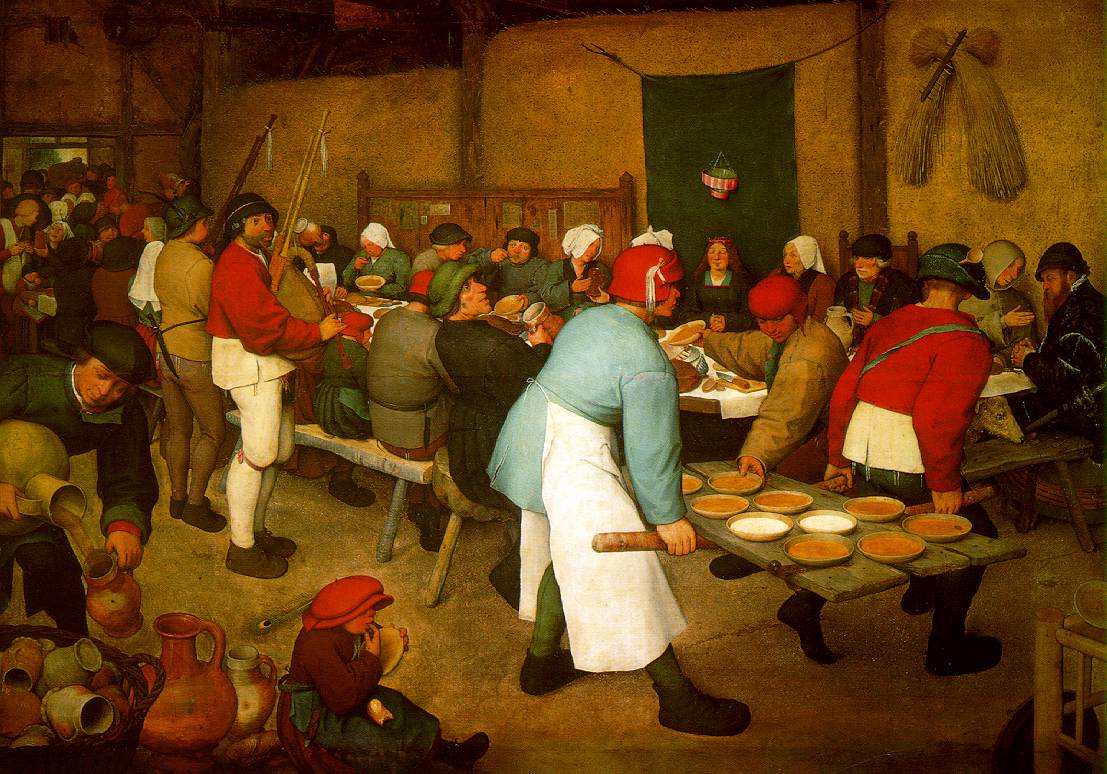
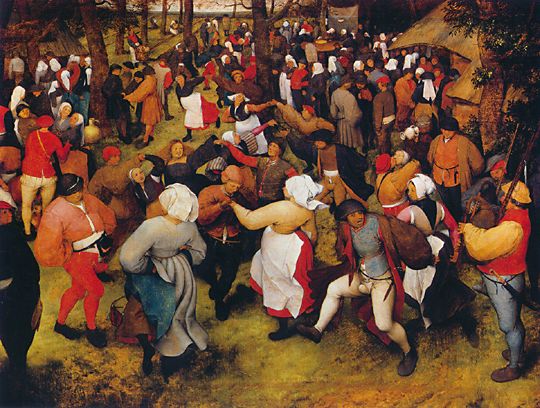
The following is the list of William Carlos Williams poems that you have from his book Pictures From Brueghel (1962). I hyperlinked each title—the Brueghel painting that each poem was named after should open when you click it.

I Self-Portrait

II Landscape with the Fall of Icarus

III The Hunters in the Snow

IV The Adoration of the Kings

V Peasant Wedding

VI Haymaking

VII The Corn Harvest

VIII The Wedding Dance in the Open Air

IX The Parable of the Blind

Assignment:

Bruegel Blog Post Period 6


Bruegel, Pieter Landscape with the Fall of Icarus c. 1558 Oil on canvas
Right click image (or any other hyper link) to open in another window.

OPTIC. I find Walter Pauk’s theory quite useful when writing about an image.[1] The AP Art History Course also uses this Acronym as a successful approach to writing about visual art. I have adapted it here with further commentary and explanation in light of your specific goals.

Post your writing in the comment box with the following five categories. You will receive full credit (20 points) for one thousand words. (15 points) for 750 words. (10 points) for 500 words. (5 points) for 250 words. The point of this is pure description. What does your eye notice first? Then what? Think space, color, dimension, etc....

  1. Overview: Conduct an Overview of the visual or graphic. I recommend an extensive brainstorming process here.
  2. Parts: Key in on the Parts of the visual by noting any elements or details that seem important. The old cliché goes “a picture is worth a thousand words”, which translates to about three pages. I think this is a good rule of thumb, but by no means a fixed rule. Describe what you see. Where do your eyes go to first? Then what? Follow the natural progress of where your eyes go. Give as much detail as possible.
  3. Title: Explain the Title (if one is present) and its relation to the piece of art. Even an “untitled piece” may tell you about the artist’s aesthetic.
  4. Interrelationships: Use the title, or your theory, and the parts of the visual as your clues to detect and specify the Interrelationships in the graphic. In other words, this is where you develop your thesis about the image and connect ideas.
  5. Conclusion: Draw a Conclusion about the piece as a whole.
[1] Pauk, Walter. How to Study in College. Boston: Houghton Mifflin, 1997, 271.

Period 6 post here. Period 6 post here. Period 6 post here.
Due on Tuesday October 9th.

Bruegel Blog Post Period 5


Bruegel, Pieter Landscape with the Fall of Icarus c. 1558 Oil on canvas
Right click image (or any other hyper link) to open in another window.

OPTIC. I find Walter Pauk’s theory quite useful when writing about an image.[1] The AP Art History Course also uses this Acronym as a successful approach to writing about visual art. I have adapted it here with further commentary and explanation in light of your specific goals.

Post your writing in the comment box with the following five categories. You will receive full credit (20 points) for one thousand words. (15 points) for 750 words. (10 points) for 500 words. (5 points) for 250 words. The point of this is pure description. What does your eye notice first? Then what? Think space, color, dimension, etc....

  1. Overview: Conduct an Overview of the visual or graphic. I recommend an extensive brainstorming process here.
  2. Parts: Key in on the Parts of the visual by noting any elements or details that seem important. The old cliché goes “a picture is worth a thousand words”, which translates to about three pages. I think this is a good rule of thumb, but by no means a fixed rule. Describe what you see. Where do your eyes go to first? Then what? Follow the natural progress of where your eyes go. Give as much detail as possible.
  3. Title: Explain the Title (if one is present) and its relation to the piece of art. Even an “untitled piece” may tell you about the artist’s aesthetic.
  4. Interrelationships: Use the title, or your theory, and the parts of the visual as your clues to detect and specify the Interrelationships in the graphic. In other words, this is where you develop your thesis about the image and connect ideas.
  5. Conclusion: Draw a Conclusion about the piece as a whole.
[1] Pauk, Walter. How to Study in College. Boston: Houghton Mifflin, 1997, 271.

Period 5 post here. Period 5 post here. Period 5 post here.
Due on Tuesday October 9th.

Monday, October 1, 2007

Red Shift Model Paper Example 5

This was a particularly good essay at tracing the change in tone in the poem. (If you ever notice the tone change in a poem and can understand either why the writer chooses to do so or how the writer changes the tone for purpose, then this is usually a rock solid thesis since it investigates how a poem works.) The integration of evidence was nicely done. A couple of the body paragraphs could have stretched the analysis, but this may just be my carping obsessions. I do think it would've been interesting, not just in this paper, to pursue the pun on the word air as well as the "contradictions" that run throughout the poem that a lot of you had noticed.

Meaghan Period 6

In “Red Shift,” Ted Berrigan titles his poem as such in order to exemplify the change in his tone as it progresses. The word “red” is synonymous with emotions that convey anger, so his tone grows in intensity and anger as he develops his thoughts. His thoughts decrease in clarity, while they conversely increase in specificity. This digression, exemplified through his changing diction, clearly denotes the change in tone, because anger usually triggers ambiguity.

At the beginning of the poem, the speaker starts to describe the setting; this is the most concrete information in the entire poem. He states the time, “8:08 p.m.” (line 1) and describes the “biting, February” (line 2) air. The speaker clarifies that it is a “winter streetscape” (line 3) that he is painting in the mind of the audience. He describes his body as an “ample, rhythmic frame” (line 1) while the wind does “fierce arabesques” (line 2). He clearly defines the setting in order to establish a base of where his thought process began. Without a starting point, it would be impossible to follow the train of thought. It proves that the configuration of the poem is methodical, not random.

The first shift in tone occurs two lines further, at the point where the speaker is able to “lean/In,” (lines 5-6). It is the bridge between the foundation and the memories that will substantiate the rest of the poem. When transitioning between two such things, the clarity level decreases, because memories can never be remembered to perfect accuracy, as time morphs and distorts them. He also begins to sound disillusioned and reminiscent, commenting that the “streets look for Allen, Frank,” (line 6). These two names symbolize two of Berrigan’s contemporary beat generation writers, and according to the following line, “Allen/is a movie” (lines 6-7) and Frank is “disappearing in the air” (7). This suggests that Allen has become very popular, like a movie, and Frank is gone, essentially from the world. Thus, the speaker seems depressed and lonely, feeling as though he has been abandoned. This is a sharp contrast to the beginning of the poem where is describing the setting in an upbeat tone.

Consequently, from this point on, his thoughts seem to wander farther and farther away from where he began; each thought takes a turn from where it was originally going. He begins with a question, asking “Who would have thought I’d be here,” (line 13) and that indicates a shift in topic and tone. He then elaborates that “love, children…money, marriage/ethics, a politics of grace” (lines 15-16) are “up in the air” (line 16), which implies that the ideals that were once held are no longer there. The “up in the air” reference, that was used previously to describe Frank, suggests that the views that once held true no longer exist around him, and he is frustrated because of it.

The boy with eyes that “penetrate the winter twilight” (line 20) is his first answer to the question, and the first sense of anger in the poem because the word ‘penetrate’ has a connotation of deep-seeded emotion; his gaze is breaking through the setting that the speaker created at the beginning of the poem, which is also representative of that shift in tone. His second answer is a “pretty girl” (line 21) who is “careening into middle-age so/To burn & to burn more fiercely than she could ever imagine” (lines 22-23). Fiercely also represents the anger and tenacity of the speaker, and he sounds as if he knew that events would turn out in such a way, and the people whom the events were happening to had no idea that it was happening. He could have been angry because of their refusal to believe in the situations that life was presenting them with.

The next answer is the “painter” (line 24). The speaker says he will “never leave [the painter] alone until we both vanish/into the thin air” (line 25). The air reference means that he is intensely devoted to this other man and nothing can tear them apart. The painter, consequently, will never leave the speaker “not for sex, nor politics,/ nor even for stupid permanent estrangement” (lines 27-28). This represents his deep attachment, and almost obsession, with the painter, because neither of the most popular reasons for two people to no longer have a relationship/friendship will ever tear them apart. He is holding on so tightly that it is becoming overbearing, and that is what he portrays in this segment of the poem.

The last eleven lines are the most irate of all, and this tone comes to the forefront when the speaker discusses death. He firmly states that he “will never die” (line 31) and will “never go away” (line 32). Because of his strong sentiments here, the speaker is afraid of death in a way, because he says he is “only a ghost” (line 33) and “you will never escape from me” (line 32). This attempt at speaking directly to the audience begins here, and so does the high level of ambiguity. He says he is “only pronouns” (line 35) and that is the biggest key to the vagueness at the end of the poem because he uses a multitude of pronouns that do not always have antecedents. In this aspect, the speaker is leaving the interpretation up to the reader of the poem, because it had a certain meaning to him, but it may have other meanings to whoever reads it. He says “now nothing/will ever change/That, and that’s that” (lines 37-39). The short, choppy sentences with very few syllables reflect his anger because the complex thoughts from the beginning and middle of the poem are no longer in use. He just says whatever comes into his head.

The last lines show the outcome of the speaker’s anger and his internal struggle. He says that he “slip[s] softly into the air” (line 41), which defines his ascent from the world. He is finally leaving his anger behind. Overall, the multiple shifts in tone reflect the thought process. A thought can trigger a repressed memory, and that memory causes one to diverge completely from his or her intended path and stray into the realm of thoughts that reflect hidden emotions of anger, frustration, and fear. Such is the case with “Red Shift.”

Feel free to post any constructive comments here, or questions, or observations. Trenchant insights are always welcome but please (always) avoid pithy observations.